A Layered Approach to Lighting Your Home
Lighting is about so much more than simply being able to see.
Used thoughtfully, it can draw our attention to the things we love, bring texture and materials to life, and completely change the way a room feels.
This article was sponsored by Buildmat. The editorial direction, product selections and opinions are my own.
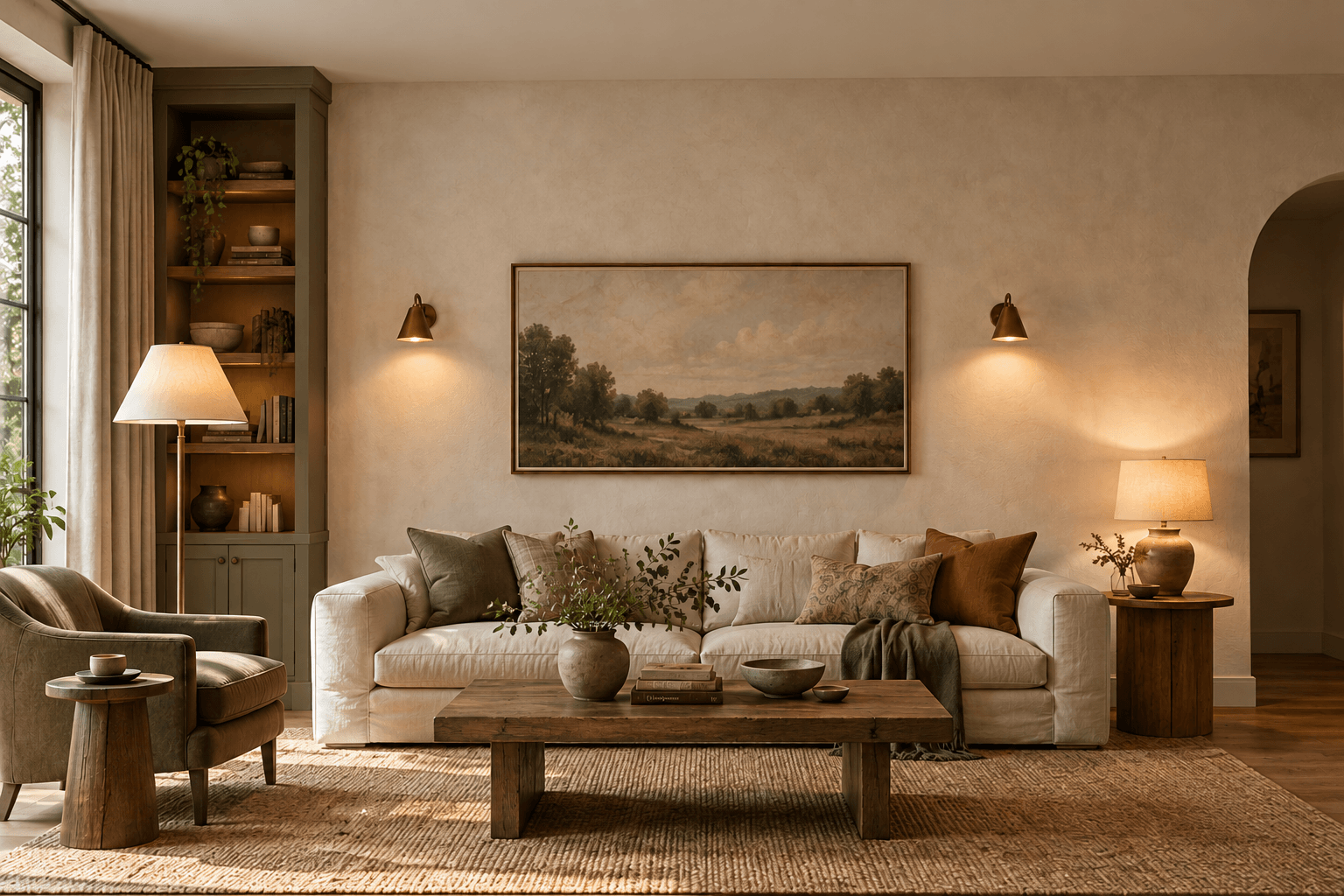
Lighting is one of those things we tend to think about quite practically. A room needs light, so we put something on the ceiling — or perhaps a neat grid of downlights — and consider the job done.
But when I think about rooms that feel particularly lovely to be in, the light rarely comes from just one place.
There might be a lamp glowing beside a chair, wall lights casting soft pools of light across the walls, or a pendant drawing your attention down towards a dining table. Some parts of the room are illuminated while others are deliberately allowed to fall into shadow.
It’s this layered lighting that gives a room depth, warmth and atmosphere — and allows the same space to feel quite different throughout the day.
Start with what you want to see
When choosing lighting for your home, it’s tempting to begin with the fittings themselves. But I think there’s a more useful place to start.
One of the most useful ways I’ve learnt to think about lighting is to begin with three questions:
What do I want to see?
How do I want to see it?
And what do I want to do here?
It’s a subtle shift, but it moves the conversation away from simply deciding where the lights should go.
Perhaps there’s an artwork you want to draw attention to, beautiful joinery you’d like to softly illuminate, or the texture of stone, timber or plaster that becomes more interesting when light falls across it.
Sometimes the most beautiful thing about a light isn’t actually the fitting at all. It’s what the light does to the surface around it.
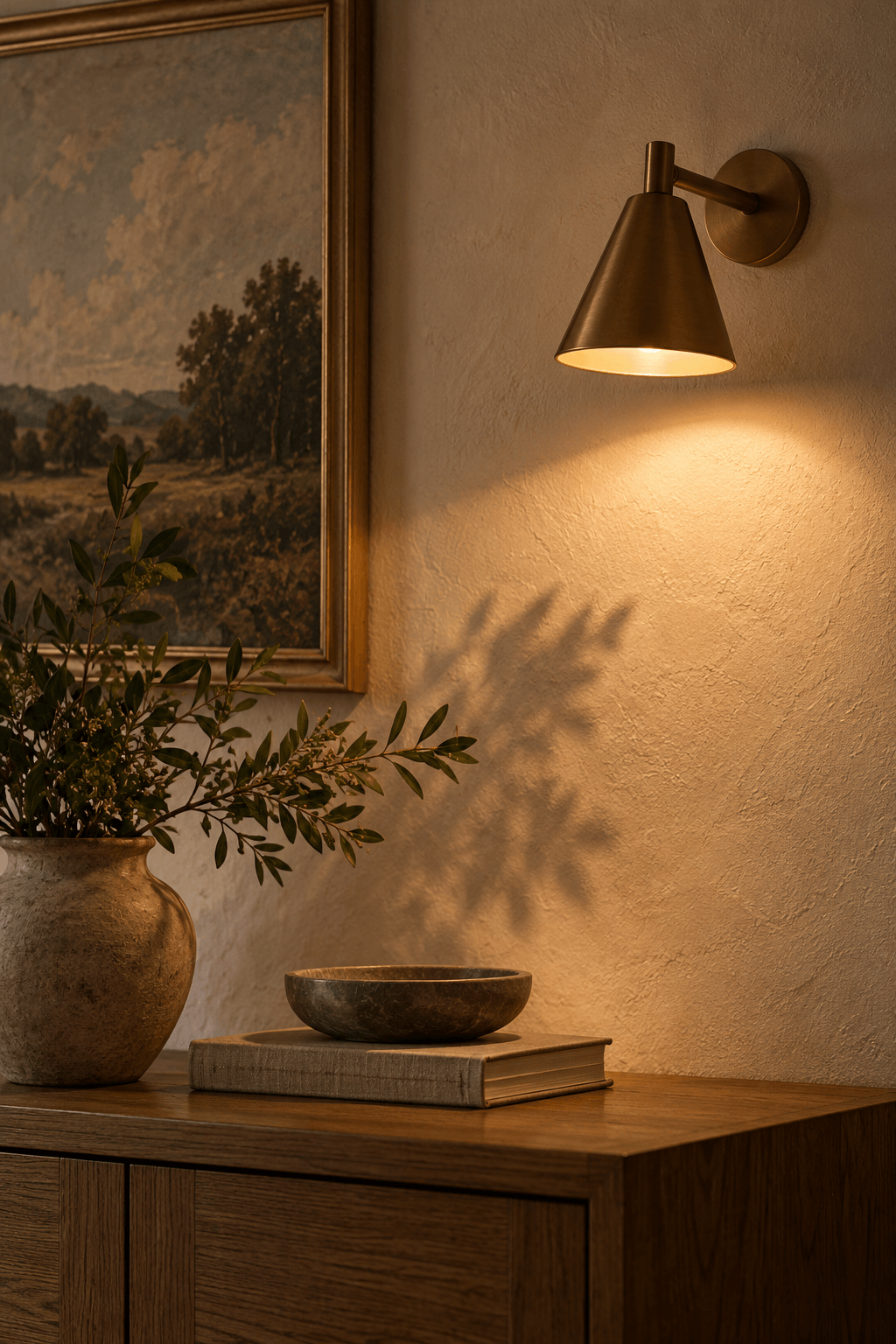
Lighting from different directions also creates shadow — and shadow isn’t something we necessarily need to eliminate. It gives a room dimension. A softly lit wall beside a darker corner can be far more atmospheric than illuminating everything evenly.
Bring some of the light down
One of the simplest ways to make a room feel more inviting is to bring some of the lighting down from the ceiling and closer to the level at which we actually live.
Wall lights, table lamps and floor lamps all create light closer to face level. They can make a seating area feel more intimate, soften a bedroom and turn an otherwise forgotten corner into somewhere you actually want to be.
Downlights certainly have their place, particularly where practical illumination is needed, but they don’t need to do all the work.
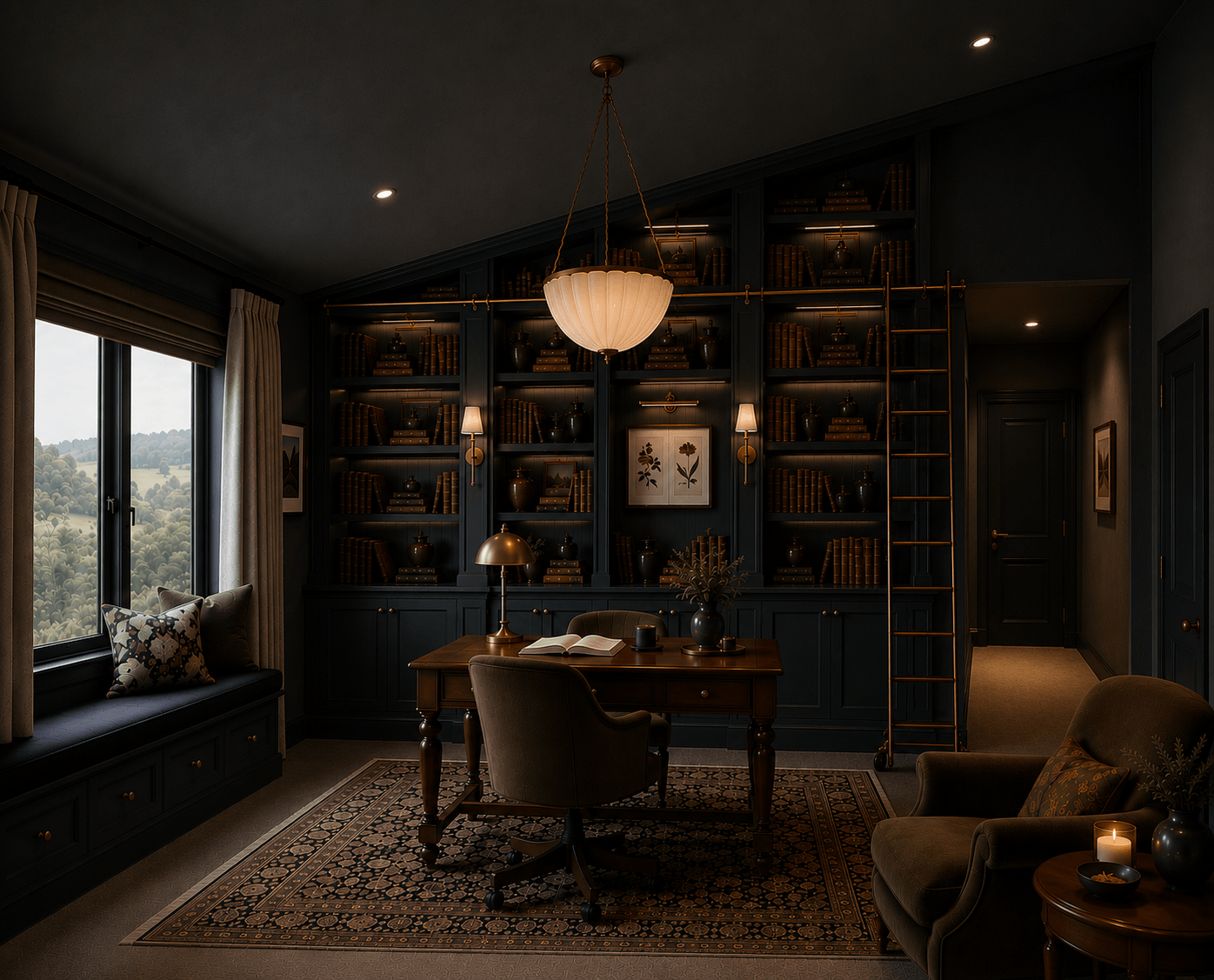
Lighting concept for a clients library project. Rather than relying entirely on overhead lighting, I introduced wall lights into the joinery to bring light closer to eye level and create a softer, more intimate atmosphere.
Rather than asking how brightly we can illuminate a room, I think it’s often more useful to ask where we actually want those pools of light to be.
A lamp beside a reading chair doesn’t need to illuminate the entire living room. A pair of wall lights might simply draw attention to artwork or beautiful joinery. A pendant hanging low over a dining table can create its own little zone within a much larger open-plan space.
The darker areas between them are part of the composition too.
Think about what you’re actually doing
Of course, atmosphere isn’t everything. A home still needs to work.
A kitchen bench needs enough light for preparing food. A reading chair needs enough light to comfortably read a book. At a bathroom vanity, you need to be able to see yourself clearly.
Sometimes that means something as simple as bringing light directly down to where it’s needed. In this walk-in robe, for example, the pendant was positioned over the island rather than simply being centred within the room.
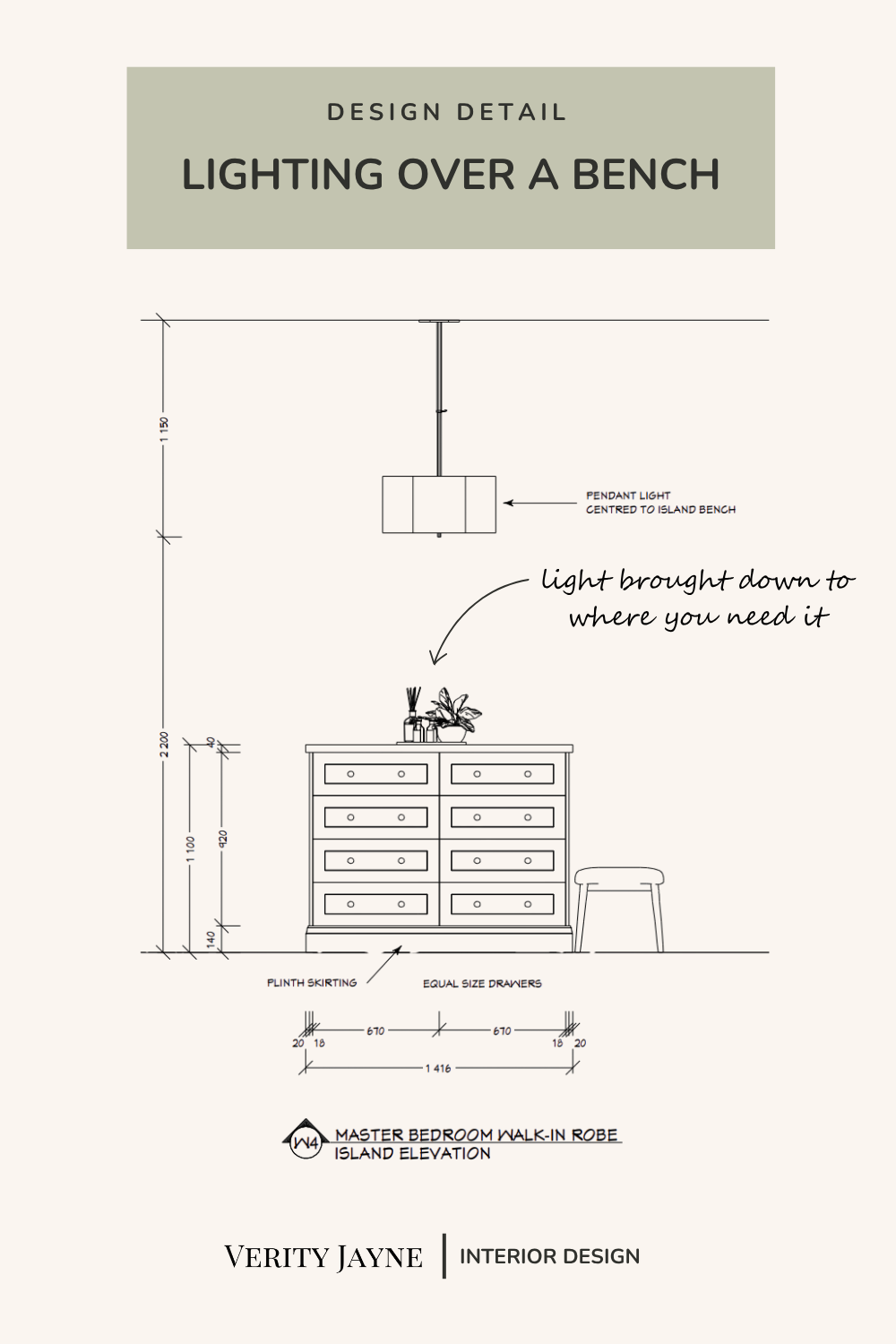
One of my elevation drawings for a project, showing the pendant positioned in relation to the joinery below.
I like rooms to have more than one lighting personality.
Separate switching and dimmers can make an enormous difference. I also love the flexibility of smart lighting, where you can adjust the brightness and warmth of the light from your phone and create different ‘scenes’ depending on the mood.
Practical lighting can be on while you’re working and then disappear later, leaving just the softer layers behind.
The same principle works beautifully in a bathroom. You may want clear, functional light around the vanity in the morning, but something much gentler if you walk into the room late at night.
Rather than one setting trying to do everything, the room can change with you.
Good lighting also lets you see colour properly
There are a few technical details worth understanding, particularly when you’ve put so much thought into the colours and materials in your home.
Colour temperature affects how warm or cool the light appears. Around 3000 Kelvin gives a warm-white light that generally works beautifully in residential interiors, although the right choice will always depend on the space and what you’re trying to achieve.
I also look at CRI — Colour Rendering Index. Put simply, a higher CRI means colours tend to appear more faithfully under artificial light.
There’s little point carefully choosing the undertone of a paint colour, the warmth of a timber or the subtle variation in a piece of stone if the lighting prevents you from seeing those colours properly.

The fitting is only part of the story
Once I’ve thought about what needs to be illuminated, what we’re doing in the space and how I want the room to feel, then I start thinking about the fittings themselves.
Scale, shape and material all matter, of course. But I also want to know what sort of light a fitting creates. Does it throw light upwards or downwards? Is the globe exposed? Will it create glare? Does it softly wash the wall around it?
There are so many beautiful options available now, and I find myself increasingly drawn to fittings that contribute to the room as an object in their own right.
Buildmat’s lighting collection is extensive, covering everything from practical architectural and task lighting through to more decorative wall lights, pendants, floor and table lamps.
I’ve pulled together a few of the more decorative pieces that caught my eye from Buildmat. I particularly like the softer forms and tactile materials — ceramic, woven fibres, linen and softly finished metals — and pieces that add something to a room even when they’re switched off.
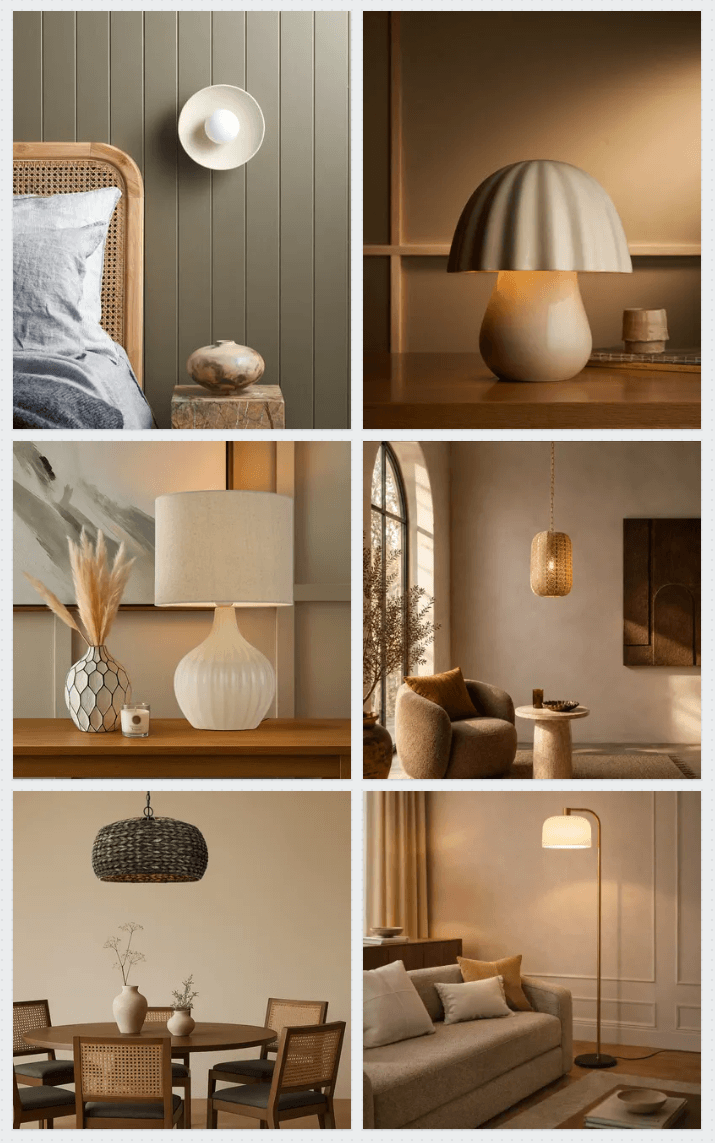
A few pieces that caught my eye from the Telbix and Robert Gordon ranges, available through Buildmat.
Of course, not every fitting needs to be the star. Some of the most important lighting in a home is barely noticed at all — quietly illuminating a work surface, highlighting a material or making it easier to see what you’re doing.
A home that changes with the light
Natural light is always the first layer.
The way sunlight moves through a home throughout the day, the orientation of the windows, the softness of light through curtains and even the seasons all change how a room feels before we’ve switched on a single light.
Then, as daylight disappears, the artificial layers gradually take over.
Ultimately, a beautifully lit home isn’t necessarily a brightly lit one.
It’s a home where the light changes according to what you’re doing, draws attention to the things you want to notice and allows a little shadow to remain.
Sometimes the smallest pool of light in the corner of a room can completely change the way that room feels.