Holding It All together
Reflections on designing four contemporary townhouses with one cohesive vision.
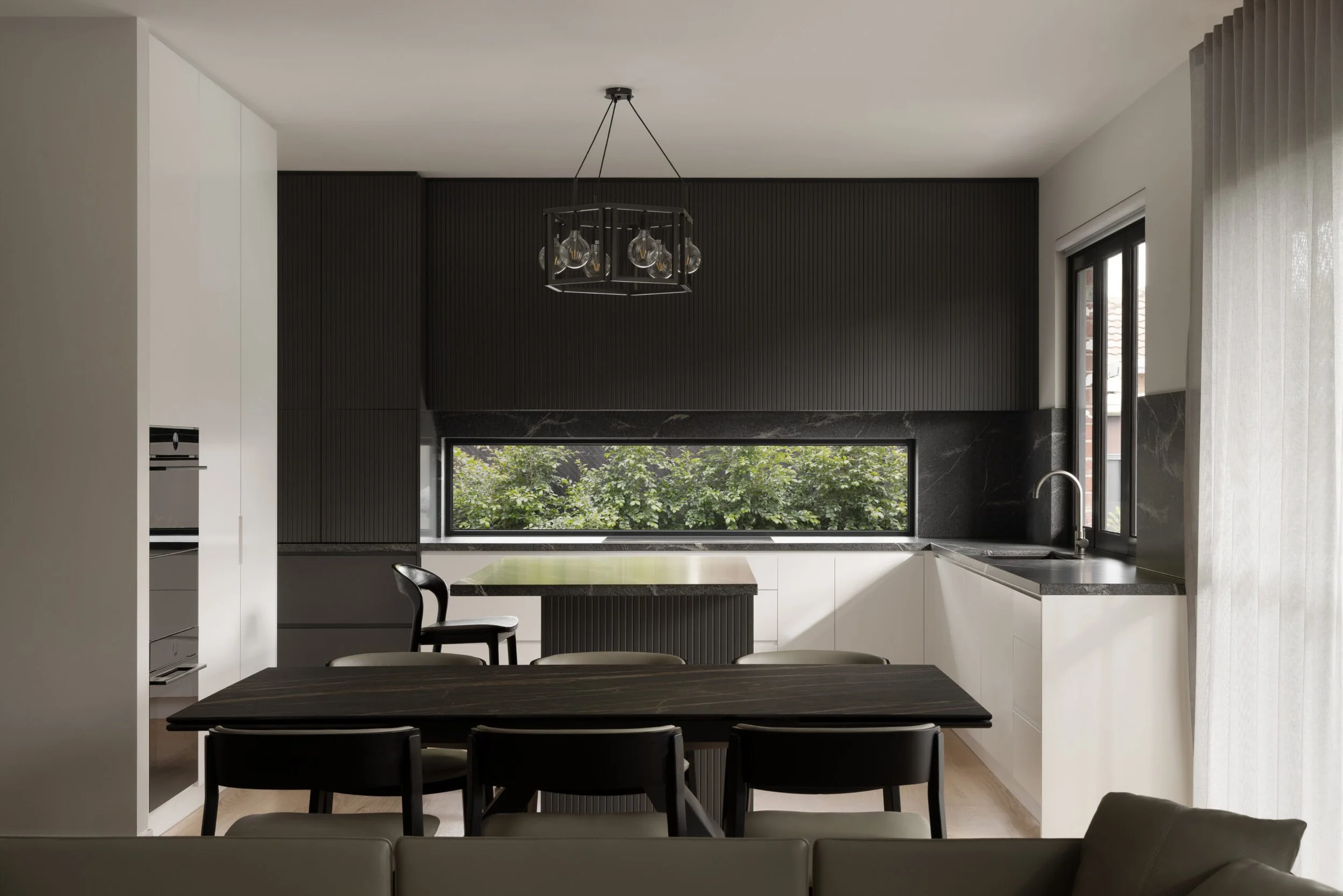
Professional photography captures the finished result, but rarely the complexity of the process behind it.
Looking back at this Melbourne townhouse project several years after its completion, I was reminded that some of the most valuable aspects of interior design happen long before the styling cushions are arranged and the photographer arrives. The drawings. The revisions. The practical questions. The quiet decisions that shape how a home ultimately functions and feels.
This particular project involved the design development of four townhouses in Melbourne, designed for luxury rental living while also accommodating the needs of the owners and their family. While each residence needed its own identity, they also had to sit comfortably alongside one another, sharing a cohesive language of materials and detailing.
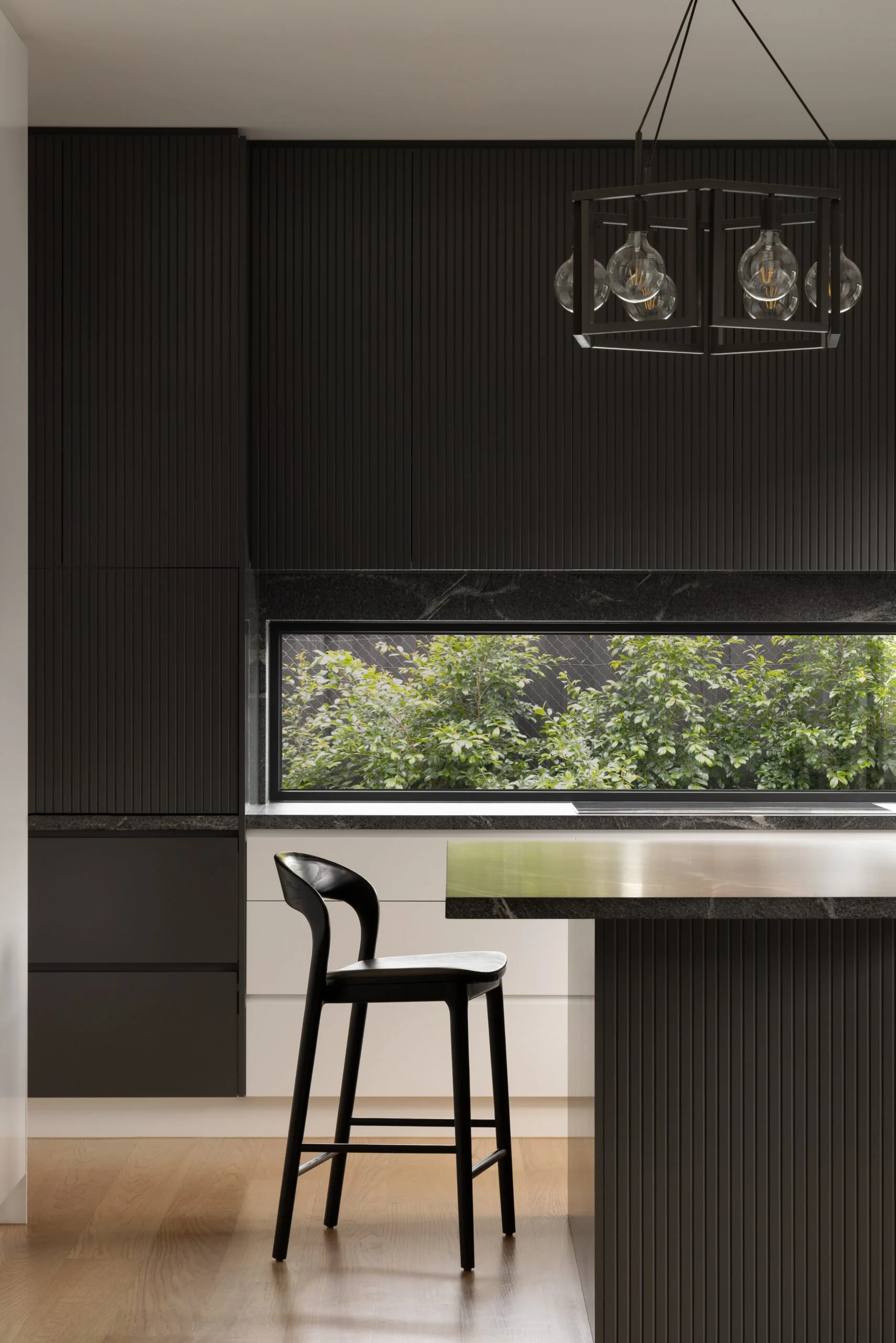
A restrained palette of dark fluted joinery, veined stone and warm timber flooring creates a kitchen that feels both sophisticated and inviting. A long horizontal window frames lush greenery outside, softening the strong architectural lines.
It is easy to notice the stone benchtops, the joinery details or the carefully selected finishes. Yet behind every completed interior are hundreds of decisions that often go unseen — refining floor plans, maximising storage, coordinating materials, balancing competing priorities and adapting as the project evolved.
What stands out most in hindsight is not a particular tile or cabinetry finish, but the process of holding many moving parts together. Bringing practicality and beauty into balance. Creating homes that feel considered and inviting. And ensuring that, despite the inevitable changes that occur throughout any project, the original intention remains intact.
Functionality Is The Foundation Of Luxury
Townhouse living often comes with assumptions about compromise.
Less storage. Less flexibility. Less room to entertain.
Yet the most successful townhouses challenge these ideas entirely.
Many future residents will be downsizing from larger homes. They still value beautiful spaces, but they also need practical solutions that support everyday life. They entertain friends and family. They collect treasured belongings accumulated over decades. They want ease and simplicity without sacrificing comfort.
Functionality, therefore, becomes the foundation upon which everything else is built.
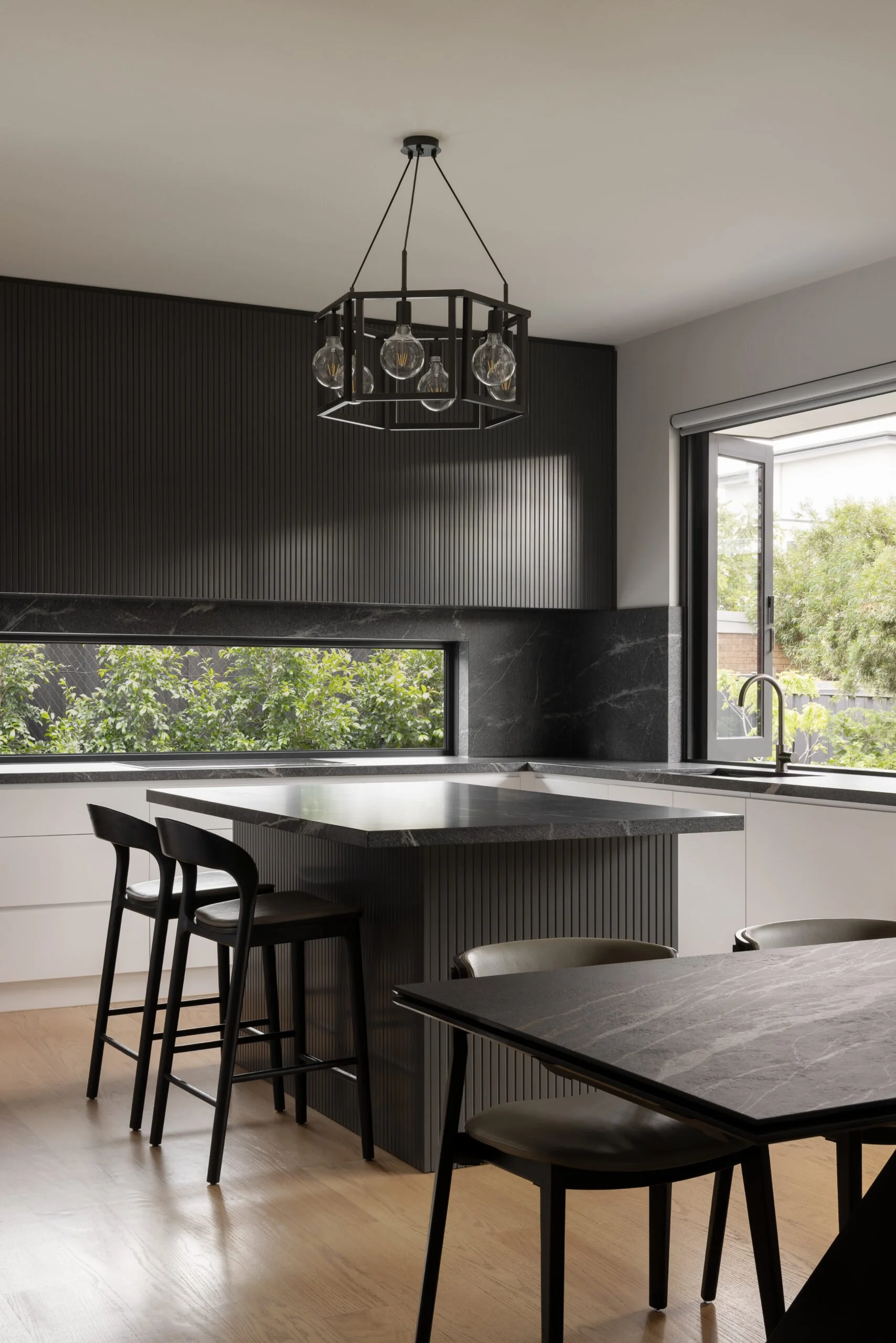
The kitchen was designed to support both everyday living and entertaining, with careful consideration given to circulation, storage and functionality.
Throughout this project, considerable time was dedicated to refining layouts and rethinking how individual spaces would function. Interior design often reveals opportunities to further improve the way a home works, and in this case, the original architectural plans underwent significant refinement as the design evolved.
Circulation paths were reconsidered. Storage opportunities were maximised. Joinery configurations were adjusted to better support the realities of everyday life.
The finished spaces may appear effortless, yet many of the most important decisions happened long before finishes were selected.
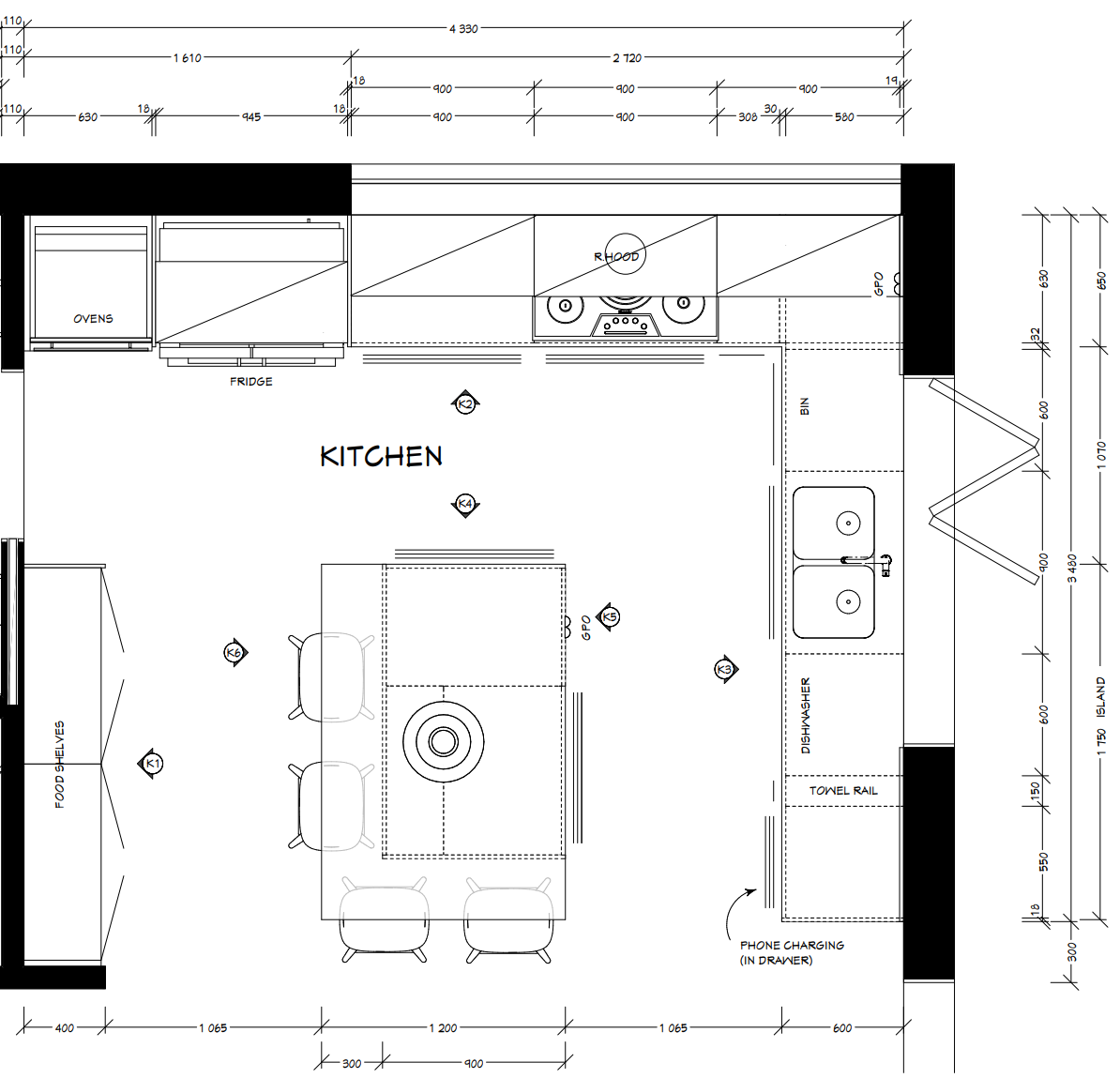
My kitchen layout plan represents a quieter side of interior design — one that rarely features in final photographs, yet profoundly influences how a home is experienced.
Creating Cohesion Across Multiple Residences
Designing a single home presents one set of challenges. Designing four residences within the same development introduces another entirely.
The townhouses needed to feel connected without becoming repetitive. Practical considerations also played a role. Coordinating materials across multiple residences allowed for efficiencies in sourcing and specification, while ensuring a consistent level of quality throughout the development.
Rather than approaching each townhouse as an entirely separate entity, a restrained palette emerged.
Finishes were selected not only for their individual beauty, but for the way they worked together as a collective whole. Black detailing, timber tones and layered neutrals created a sophisticated backdrop that felt contemporary yet inviting.
Through subtle variations in application, each townhouse retained its own character while contributing to a broader sense of cohesion.
This restraint became one of the project's greatest strengths.
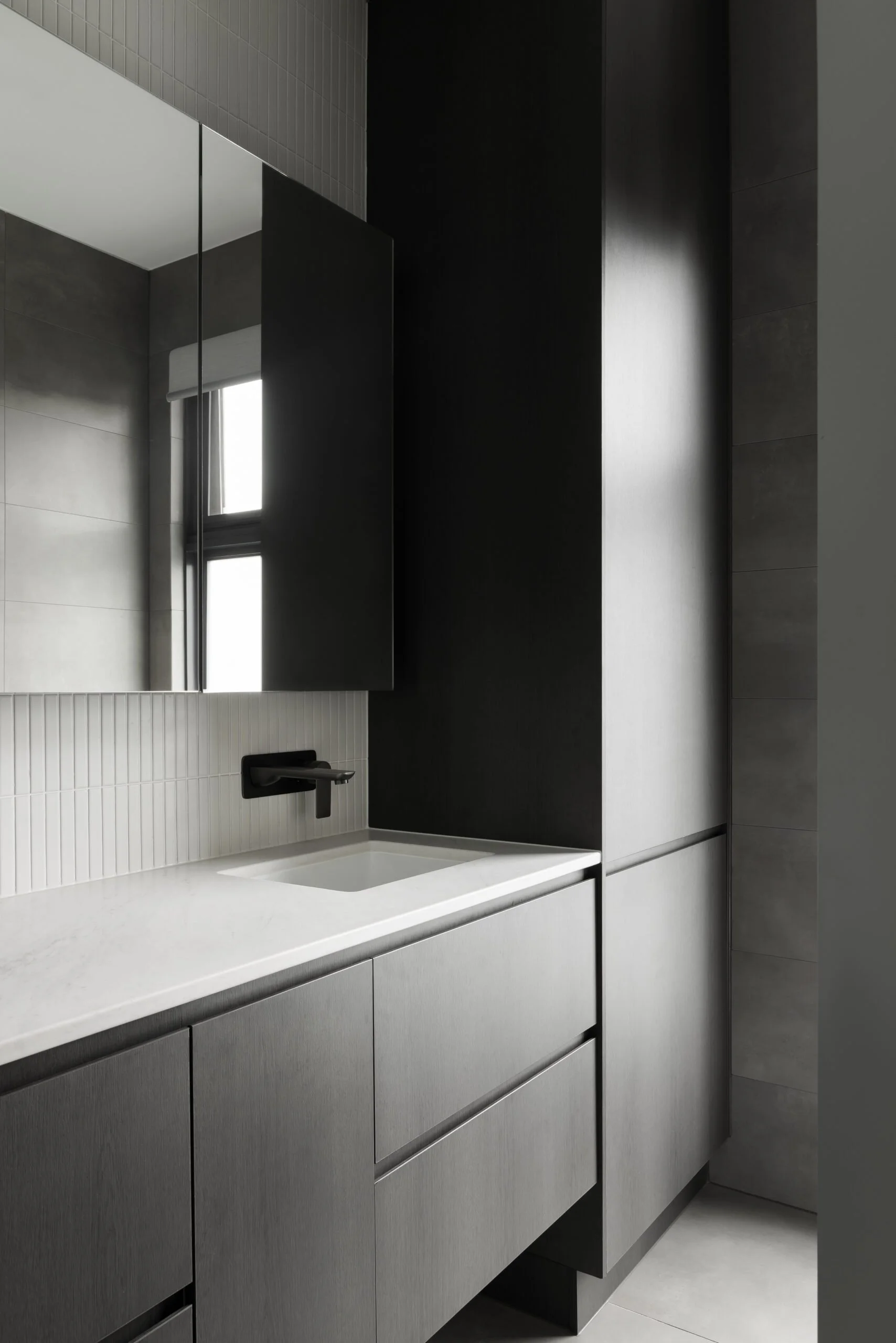
A consistent material palette and restrained detailing helped create a sense of continuity throughout the four townhouses. Subtle variations in texture, scale and application allowed each space to feel individual while contributing to a cohesive overall vision.

Texture Creates Warmth
There is often a misconception that clean lines and contemporary interiors must feel stark.
Yet simplicity and warmth are not opposing ideas.
Throughout these townhouses, texture played an important role in softening the overall aesthetic. Vertical panelling introduced rhythm and depth. Tile layouts created moments of visual interest. Changes in materiality brought richness and contrast without overwhelming the spaces.
Rather than relying on an abundance of finishes, a smaller number of carefully considered elements were layered thoughtfully throughout the interiors.
The result was a collection of homes that felt polished and refined, while remaining welcoming and comfortable.
It is often these quieter details that create the difference between an interior that simply looks beautiful and one that genuinely feels inviting.
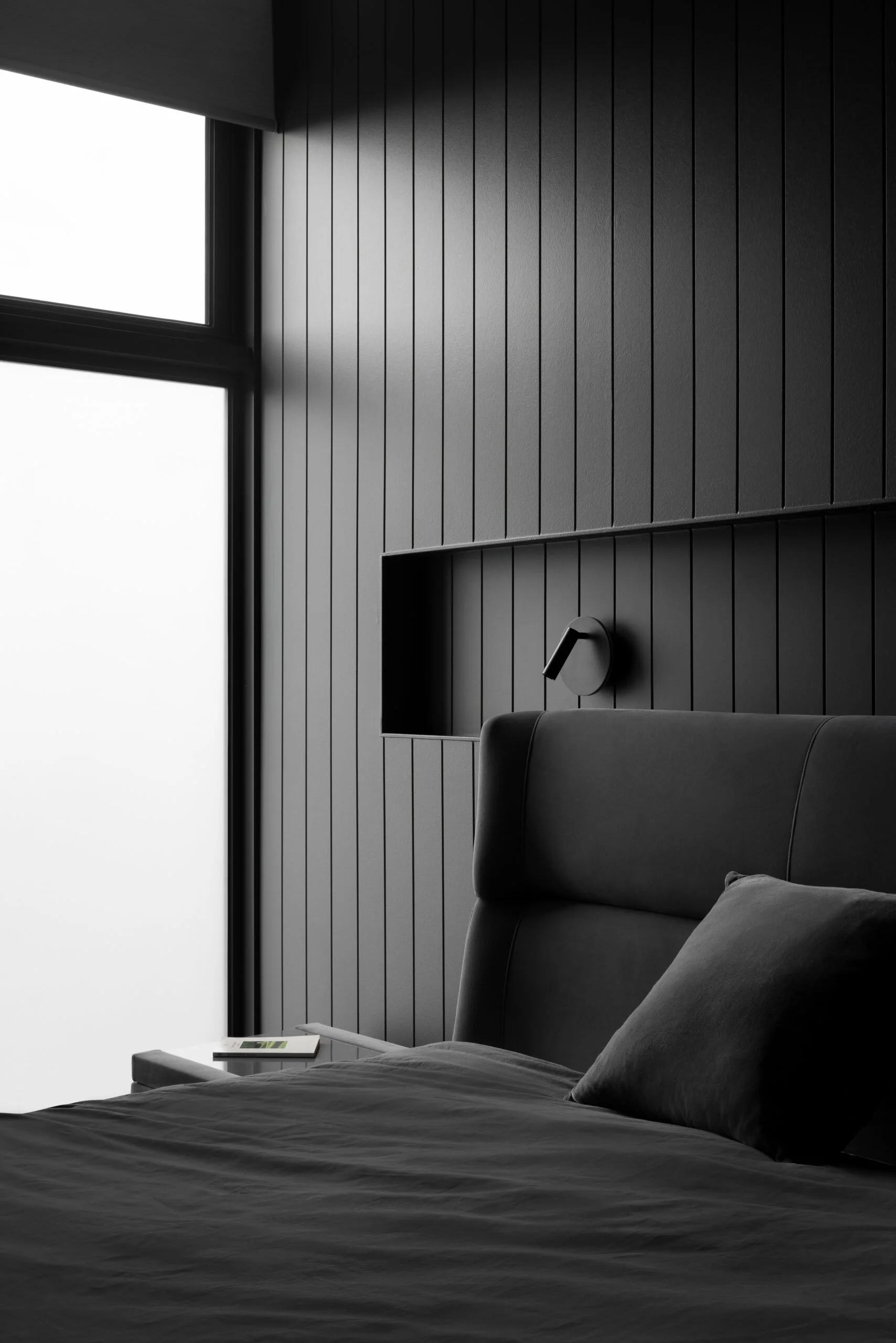
Vertical panelling, layered textiles and integrated detailing introduce depth and softness to this contemporary bedroom. Rather than relying on colour alone, texture creates warmth and transforms a restrained palette into a space that feels calm and inviting.
Design Is Rarely Linear
One of the most valuable lessons repeated throughout every project is that design rarely follows a perfectly straight path.
Ideas evolve.
Priorities shift.
New possibilities emerge.
Large projects, in particular, require flexibility and thoughtful decision-making as circumstances change.
The role of a designer is not necessarily to preserve every original specification exactly as first imagined. Rather, it is to protect the essence of the design as the project unfolds — maintaining clarity, cohesion and functionality while navigating inevitable adjustments along the way.
This process asks for equal parts creativity and pragmatism.
It requires knowing when to adapt, when to simplify, and when to gently guide a project back towards its original intention.
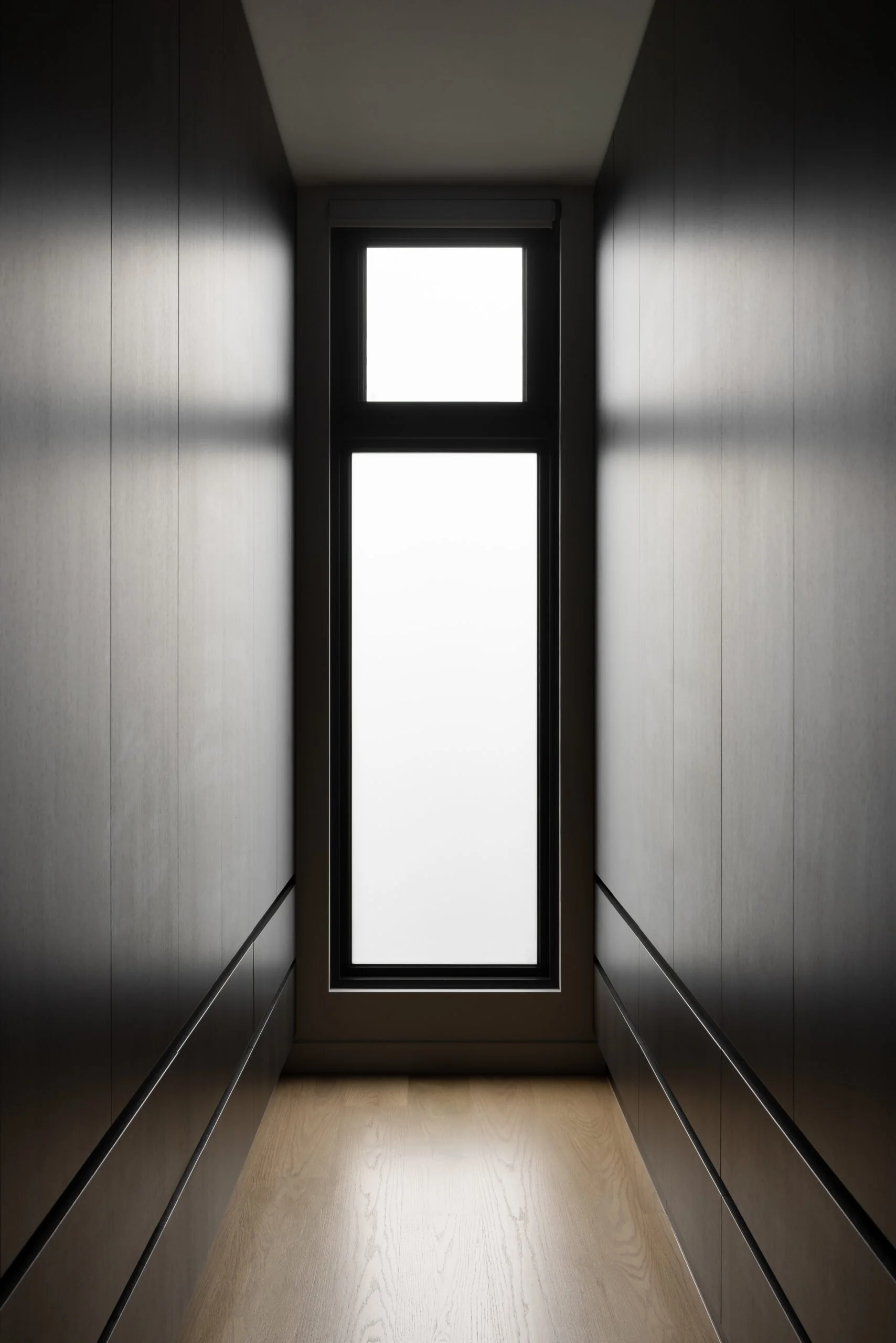
Full-height joinery maximises storage while maintaining a clean, cohesive aesthetic throughout the home. Thoughtful planning and careful refinement helped transform practical requirements into spaces that feel calm, ordered and considered.
Holding It All Together
Looking back, I realise that the most meaningful aspect of this project wasn't any individual finish or detail.
It was the process of bringing many considerations together.
Functionality and beauty.
Individuality and consistency.
Practicality and aspiration.
Creating homes that feel cohesive, inviting and effortless often involves a great deal of unseen work behind the scenes. The drawings, revisions, conversations and countless decisions may never appear in the final photographs, yet they shape the experience of living within those spaces every single day.
Perhaps this is one of the quieter roles of interior design.
Not simply making homes look beautiful, but helping to hold complexity together long enough for clarity to emerge.
Because the spaces we remember most are rarely defined by a single material selection.
Instead, they are the ones that support the way we live — thoughtfully, practically and with a sense of ease.
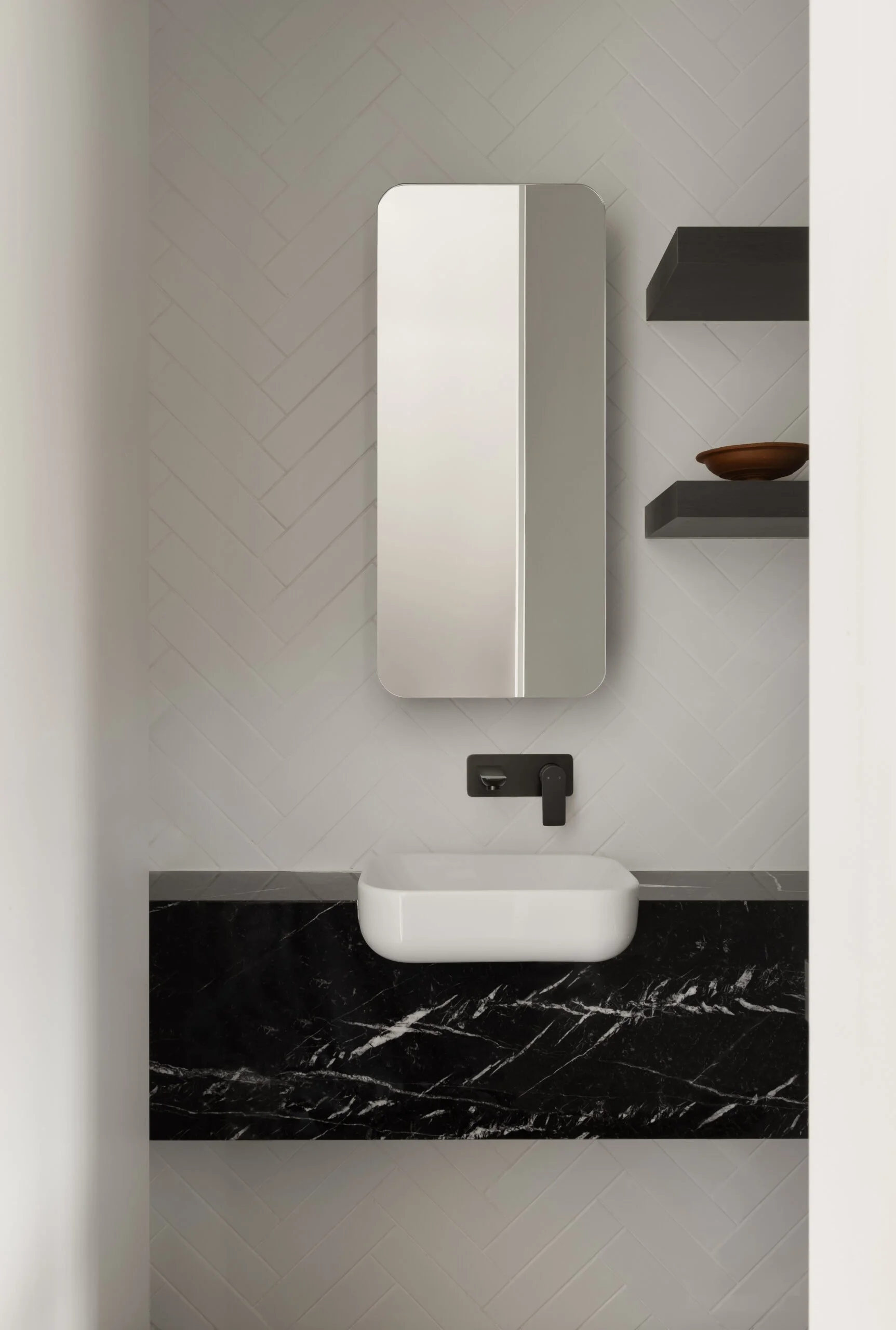
In many ways, it is the quieter spaces that reveal the greatest level of care. Restrained materials, thoughtful detailing and a cohesive palette bring even the smallest rooms into the broader vision of the home.